

Do You Use Electronic Signatures?
In recent years, the adoption of electronic signatures has accelerated significantly. While they offer numerous advantages for companies, they also present certain drawbacks. However, several upcoming developments are expected to encourage their wider adoption and expand their use.
As explained by Sébastien Rimlinger, Avocat à la Cour at Brucher Thieltgen & Partners, “an electronic signature is a digital process that formally identifies the signatory of a document”.
Regulated for more than twenty years, electronic signatures are not a recent development in Luxembourg. However, their use increased significantly during the Covid-19 pandemic, as individuals and businesses sought to limit professional travel. Today, professionals are increasingly adopting this tool.
An Option, Not an Obligation
Many documents can be signed electronically.
“Companies can, for example, use electronic signatures to sign board meeting minutes or contracts concluded with third parties. Multinational companies are particularly keen on using this tool.”
Electronic signatures are not mandatory and primarily represent an option available to those wishing to use them. Furthermore, they cannot be used for all types of documents. Notarial deeds, for example, are currently not eligible.
The Different Types of Electronic Signatures
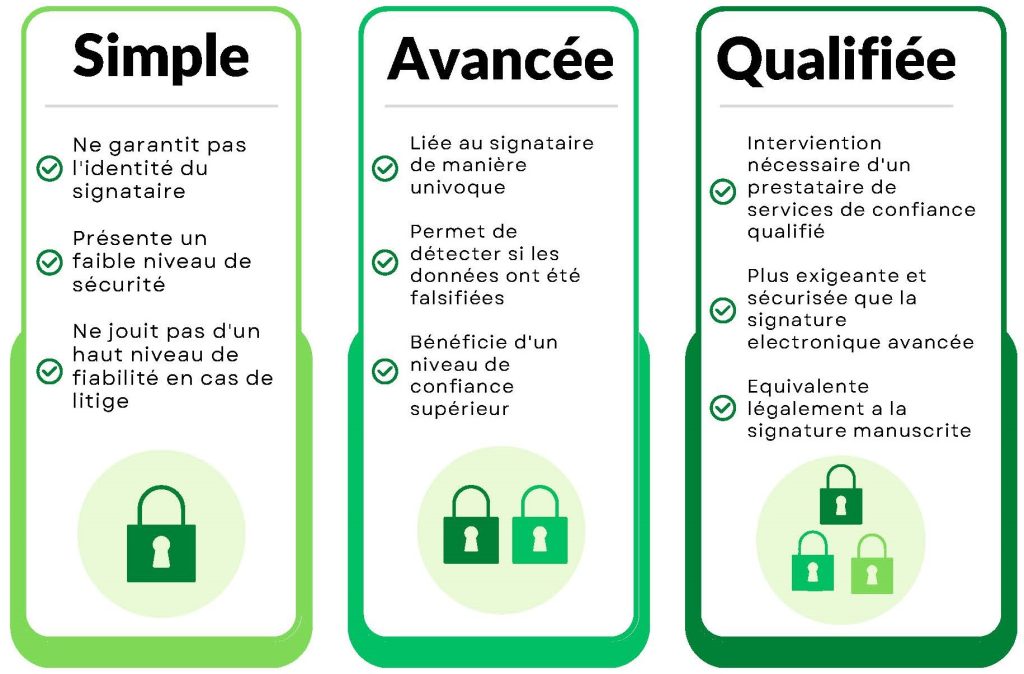
There are currently three types of electronic signatures.
The first level is the simple electronic signature. It does not provide sufficient assurance that the person signing the document is indeed who they claim to be. Consequently, it does not offer a high level of reliability in the event of a dispute.
The second level is the advanced electronic signature, which is uniquely linked to the signatory.
“This signature is created using electronic signature creation data that the signatory can use under their sole control. It certifies the signatory’s identity through a personal digital certificate.”
Finally, the qualified electronic signature meets even stricter technical requirements than the advanced electronic signature. It requires two elements: (1) the signatory’s identity must first be verified by a qualified trust service provider, and (2) the signature must be created using a qualified electronic signature creation device.
“We recommend using a qualified electronic signature or, at the very least, an advanced electronic signature. In the event of a dispute, the party concerned will be better positioned to prove the signatory’s identity. A qualified electronic signature has the same legal effect as a handwritten signature.”
Numerous Advantages
Electronic signatures offer several advantages:
- When used for contracts, they save time and allow parties to sign documents remotely.
- They help reduce costs, including travel expenses.
- They have a positive environmental impact by reducing the need to print documents, thereby contributing to the fight against deforestation.
- They also offer legal advantages because “throughout Europe, electronically signed documents are recognised on an equivalent basis, regardless of the country concerned”.
But Also Some Drawbacks
Electronic signatures also present certain disadvantages.
“Unlike large companies, smaller organisations are still reluctant to use this type of solution or are simply unaware that it is available. Its adoption therefore remains relatively limited. The fact that electronic signatures cannot be used for every type of document also restricts their application.”
As electronic signatures rely on software, their implementation also requires a financial investment and adequate IT infrastructure.
“There is no guarantee that all SMEs can afford such solutions.”
Technical expertise is also necessary.
Finally, electronic archiving requires the involvement of a specialised service provider and raises numerous challenges relating to document confidentiality and security.
The Three Types of Electronic Signatures
The Need for a Preliminary Assessment
A preliminary assessment should be carried out to determine the actual needs of each professional or organisation. This process can be undertaken with the assistance of Brucher Thieltgen & Partners.
“We discuss our clients’ expectations with them and explain the advantages and disadvantages of the various solutions available.
Depending on their requirements, we then assist them in implementing new internal procedures.
We also help them review their agreements with service providers and ensure compliance with data protection requirements.
Furthermore, we can advise our clients at any time on the appropriate level of electronic signature to use, depending on the nature of the document being signed.”
Upcoming Developments
Bill No. 7968, currently under discussion, is expected to introduce several developments in this area.
A legal framework governing authentic instruments should be established. It should also become possible to incorporate companies remotely using electronic procedures.
Finally, the creation of an electronic notarial platform is being considered as part of the project to digitalise the notarial profession.
There is little doubt that electronic signatures will become even more firmly established in Luxembourg’s business environment in the coming years.
For further information, please do not hesitate to contact:
Sébastien Rimlinger, Counsel : sebastien.rimlinger@btplawyers.lu