

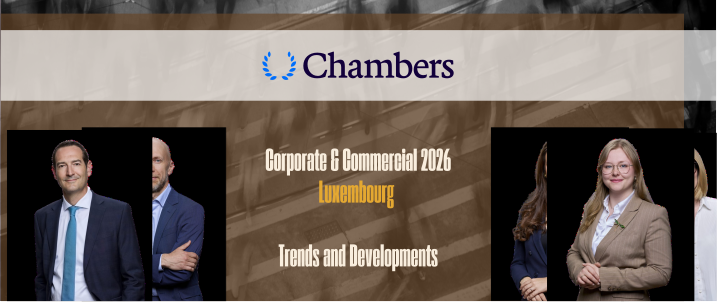
Corporate & Commercial 2026 – Luxembourg: Trends and Developments
Doing Business in Luxembourg in 2026: Key Corporate and Commercial Trends
Introduction
Luxembourg continues to occupy a distinctive position in the European business landscape. Its small domestic market is offset by an unusually international economy, sophisticated financial infrastructure, political stability, multilingual workforce and legal environment designed to accommodate cross-border investment. For international groups, Luxembourg is consequently less a conventional “local market” than a European platform from which to hold investments, finance operations, conduct regulated activities, acquire businesses or establish regional headquarters.
That positioning is increasingly relevant in 2026. Luxembourg remains attractive, but the legal environment in which businesses operate has become considerably more demanding. Corporate structures are subject to greater scrutiny; directors and shareholders face heightened governance expectations; M&A transactions increasingly require regulatory and geopolitical analysis; restructuring law has become more sophisticated; and digitalisation, artificial intelligence, sustainability and financial-sector regulation are changing the contractual and compliance landscape.
The central message for businesses considering Luxembourg is therefore straightforward: the jurisdiction remains highly business-friendly, but successful market entry now requires legal structuring and risk management to be considered as part of the commercial strategy rather than as an exercise undertaken after the business model has been established.
Luxembourg remains a strong jurisdiction for international business
Luxembourg’s principal corporate advantage is its ability to accommodate international structures. The jurisdiction offers a mature framework for holding companies, operating companies, financing vehicles, investment structures and joint ventures. Its corporate law provides considerable flexibility in structuring share capital, shareholder rights, governance arrangements and corporate reorganisations.
This makes Luxembourg particularly relevant to international groups establishing European platforms. A Luxembourg company can function as a holding entity, financing company, acquisition vehicle, regional headquarters or operating subsidiary, depending on the underlying business.
However, international investors should avoid viewing Luxembourg merely as a jurisdiction offering a convenient corporate form. The legal and regulatory substance of the structure has become increasingly important.
A Luxembourg entity should have a clearly defined purpose, appropriately documented decision-making processes and governance arrangements that correspond to its actual activities. Directors should understand their duties and the boundaries of delegated authority. Intercompany arrangements should be documented consistently with the group’s operational reality.
For international groups, corporate housekeeping is becoming an increasingly important component of legal risk management. Minutes, powers of attorney, shareholder resolutions, delegated authorities, related-party arrangements and intercompany agreements should not be treated as administrative formalities. In a dispute, financing, audit, regulatory review or M&A transaction, they may become critical evidence of how the business was actually managed.
RAIFs: continued expansion of Luxembourg’s alternative investment toolbox
The Reserved Alternative Investment Fund (RAIF) has become one of the defining features of Luxembourg’s alternative investment offering and is likely to remain an important growth area. Its appeal lies principally in the combination of structural flexibility, relatively rapid time-to-market and access to the EU-wide AIFMD marketing framework, while the RAIF itself is not subject to prior product approval or direct prudential supervision by the CSSF; supervision is instead exercised indirectly through its authorised Alternative Investment Fund Manager (AIFM). This makes the RAIF particularly suitable for private equity, private debt, real estate, infrastructure, venture capital and other alternative strategies where institutional and well-informed investors value both flexibility and an onshore EU domicile. Luxembourg’s 2023 modernisation of the investment-fund framework further strengthened the attractiveness of the regime, including by extending the period for RAIFs to reach their minimum capitalisation requirement from 12 to 24 months. The continued expansion of alternative investment activity is also reflected more broadly in Luxembourg’s fund market: alternative investment funds accounted for approximately 35% of assets in Luxembourg-domiciled funds at the end of 2025. For sponsors and international investors, the RAIF therefore remains a particularly compelling structuring option, although the choice between a RAIF, SIF, SICAR, Part II fund or other Luxembourg vehicle should be assessed in light of the intended asset class, investor base, tax profile, regulatory requirements and distribution strategy.

M&A activity is recovering, but transactions are becoming more selective
The Luxembourg M&A market experienced the same difficulties as much of Europe during the period of higher interest rates, geopolitical uncertainty and expensive acquisition financing. By 2025, however, transaction activity had begun to recover materially.
This recovery does not mean that the market has returned to the transaction environment of the ultra-low-interest-rate period. Buyers are generally more selective, financing is scrutinised more carefully and valuation gaps remain a feature of certain transactions.
For sellers, this places greater emphasis on preparation. A business entering a sale process should ideally undertake a legal “vendor due diligence” exercise before approaching potential buyers. Particular attention should be paid to corporate records, shareholder arrangements, material contracts, change-of-control provisions, intellectual property, employment arrangements, financing, litigation, regulatory licences, data protection and intra-group relationships.
For buyers, Luxembourg transactions increasingly require a broader conception of due diligence. The question is no longer simply whether the target owns its assets and has valid contracts. Buyers should consider whether the target’s business model is exposed to new regulatory regimes, including AI regulation, cybersecurity requirements, sustainability rules, financial-sector regulation or foreign-investment screening.
The traditional M&A process is consequently evolving from a predominantly legal and financial exercise towards a more integrated legal, regulatory and geopolitical risk assessment.
Foreign investment screening should be considered early
Luxembourg introduced its national foreign direct investment screening regime under the Law of 14 July 2023, which entered into force on 1 September 2023. The mechanism applies to certain foreign investments that may affect security or public order.
The practical importance of this regime is increasing. An acquisition involving a non-EU investor should therefore not be analysed solely through the lens of Luxembourg company law. The parties should determine at an early stage whether the target’s activities fall within sensitive areas and whether a notification may be required.
This can have consequences for transaction timetables, conditions precedent, long-stop dates and allocation of regulatory risk in the acquisition agreement.
The issue is particularly relevant to technology, critical infrastructure, energy, communications, data, financial infrastructure and other strategically important activities. At EU level, the framework has also continued to develop.
Foreign direct investment (FDI) analysis should become part of the initial M&A feasibility assessment rather than a regulatory afterthought during signing or closing.
Corporate governance and shareholder relations deserve greater attention
Shareholder conflict is an important area of corporate risk. Disputes frequently arise not because the corporate structure is defective at incorporation, but because relationships between shareholders deteriorate over time.
Joint ventures and closely held companies are particularly exposed. Questions concerning financing, dividends, management appointments, business strategy, related-party transactions, acquisitions and exits can rapidly become contentious.
A well-drafted shareholders’ agreement can materially reduce this risk. Shareholders should consider provisions addressing reserved matters; appointment and removal of directors; quorum and voting arrangements; deadlock; transfer restrictions; pre-emption rights; drag-along and tag-along rights; exit mechanisms; information rights; financing obligations; confidentiality; related-party transactions; valuation mechanisms; and dispute-resolution procedures.
The agreement should be designed around the parties’ actual commercial relationship. The same principle applies to the company’s articles of association. Contractual rights between shareholders and corporate rights enforceable against the company should be co-ordinated carefully.
Directors should approach governance as a continuing process
International groups sometimes treat a Luxembourg subsidiary as a passive administrative vehicle. That approach carries increasing risk.
Boards and managers need to understand what decisions they are making, whether they have sufficient information to make those decisions and whether the decision-making process is properly documented.
This is particularly important when a Luxembourg company enters into significant financing arrangements, acquisitions, disposals, guarantees, upstream or downstream transactions or restructurings.
The increased regulatory emphasis on cybersecurity, sustainability, sanctions, AI and financial crime also means that directors may encounter issues that did not traditionally appear on the corporate agenda.
Good governance does not require directors to become specialists in every regulatory discipline. It does require them to identify when specialist advice is necessary and to ensure that material risks are appropriately considered.
Luxembourg’s restructuring and insolvency framework is becoming more useful
The Law of 7 August 2023 on business preservation and the modernisation of bankruptcy law introduced significant changes intended to strengthen the domestic restructuring framework.
The significance for businesses is considerable. Financial distress should no longer automatically be regarded as a binary choice between continuing business as usual and entering bankruptcy. Management and shareholders have a wider range of restructuring tools and should consider them sufficiently early.
The key commercial issue is timing. Once liquidity problems become acute, management’s room for manoeuvre can diminish quickly. Creditors become more active, financing arrangements may be triggered, counterparties may terminate contracts and asset values may deteriorate.
Businesses experiencing financial stress should therefore seek advice before a formal insolvency event occurs. For creditors and investors, the new environment also creates opportunities to acquire distressed assets through structured transactions, settlements and other restructuring arrangements.

AI is now a corporate governance issue, not merely a technology issue
Artificial intelligence has become one of the most significant new areas of commercial legal risk. The Regulation (EU) 2024/1689 of the European Parliament and of the Council of 13 June 2024 laying down harmonised rules on artificial intelligence (EU AI Act) applies progressively, with major rules applying from August 2026 subject to specific transitional arrangements.
For Luxembourg businesses, AI governance should now be treated as a board-level business issue. Companies should identify what AI systems they use, what data is supplied to those systems, whether third-party providers are involved, whether employees use generative AI tools and whether AI is incorporated into products or services sold to customers.
Contracts with technology providers should address ownership and licensing, confidentiality, personal data, cybersecurity, liability, service levels, audit rights, data location, subcontracting, regulatory compliance, termination and transition arrangements.
For employers, internal AI use is another important issue. Employees may use generative AI to draft documents, analyse information or process customer data without management having approved the practice. A sensible corporate policy should establish what tools may be used, what information may be uploaded and who is responsible for verifying AI-generated output.
Sustainability regulation is becoming more targeted but not irrelevant
Sustainability regulation has entered a new phase. EU reforms have altered the direction of travel for corporate sustainability reporting and due diligence, with an emphasis on reducing administrative burdens and focusing the most demanding requirements on larger businesses.
This should not be interpreted as a reason to disregard ESG information. Even companies outside the final mandatory reporting perimeter may face requests from banks, investors, customers, insurers and larger counterparties for sustainability information.
This creates a value-chain effect: smaller Luxembourg companies may not themselves be directly subject to every reporting obligation, but may nevertheless be required contractually to provide information to larger customers or group companies.
M&A transactions are also affected. Buyers may increasingly ask whether the target has reliable sustainability data, appropriate policies, exposure to environmental liabilities or contractual commitments relating to sustainability.
Financial-sector regulation continues to influence the wider corporate market
Luxembourg’s corporate environment cannot be separated from its financial-sector ecosystem. Many corporate transactions involve banks, investment funds, asset managers, financing vehicles, regulated service providers or financial infrastructure.
Digital operational resilience is a good example. DORA EU Regulation became applicable on 17 January 2025 and establishes requirements designed to strengthen ICT resilience in the financial sector.
For businesses providing technology, outsourcing, cloud, data or other services to regulated financial entities, contractual requirements arising from DORA can become commercially important even if the service provider is not itself a regulated financial institution.
Contracts may therefore need to address incident reporting, audit rights, business continuity, subcontracting, access to information and termination arrangements.
The Luxembourg financial ecosystem continues to create corporate opportunities
The country’s position as a major European financial centre remains a significant advantage for corporate clients. The investment-management ecosystem provides opportunities for businesses raising capital, structuring investment platforms or interacting with institutional investors.
For businesses, financing strategy should be considered alongside corporate structure. A capital raising may involve equity, shareholder loans, convertible instruments, preferred shares or other arrangements. The appropriate solution depends on the company’s objectives, investor requirements, governance consequences and regulatory environment.
This is particularly relevant to growing technology and entrepreneurial businesses. The legal documentation should not only establish the immediate financing but anticipate the next financing round, potential investor rights, dilution, exit scenarios and future governance.
Tax and Pillar Two developments reinforce the need for group-wide planning
Corporate structuring cannot be separated from international tax developments. The OECD/G20 Pillar Two framework and the EU’s implementation of the global minimum tax have introduced additional compliance and reporting considerations for large multinational groups.
Luxembourg has implemented Pillar Two and has continued adapting its legislation to subsequent OECD and EU developments, including measures relating to DAC9 and the exchange of Pillar Two information.
For corporate lawyers, the significance is not that they replace tax advisers. Rather, tax considerations increasingly affect the legal architecture of transactions.
Acquisition structures, intra-group financing, reorganisations and distributions should therefore be reviewed jointly from corporate, regulatory and tax perspectives.
Commercial contracts require greater regulatory sophistication
Traditional commercial agreements focused primarily on price, delivery, warranties, liability and termination. Modern contracts increasingly include provisions addressing data protection, cybersecurity, AI, ESG, sanctions, business continuity, regulatory change and audit rights.
Businesses entering Luxembourg should review their standard international contracts against Luxembourg mandatory rules and the particular regulatory environment of the sector.
This is particularly relevant for distribution, franchising, outsourcing, technology, services and supply-chain arrangements. A contract governed by foreign law may still have mandatory Luxembourg or EU rules applying to particular aspects of the relationship.
The increasing internationalisation of Luxembourg commerce therefore makes cross-border contractual analysis a core part of ordinary commercial advice.

Litigation risk should be addressed before the dispute begins
Businesses often focus heavily on the merits of a dispute while underestimating procedural and strategic questions: preserving evidence, protecting confidential information, selecting the appropriate forum, obtaining interim relief and controlling communications.
For shareholders, the first important step in a conflict may be determining whether a general meeting can proceed, whether a shareholder resolution can be challenged or whether urgent judicial intervention is required.
For commercial counterparties, it may involve securing assets, preserving evidence or negotiating an exit before the dispute escalates.
A well-designed dispute strategy can therefore preserve commercial value even where litigation ultimately becomes unavoidable.
Cross-border enforcement and international co-ordination remain essential
Luxembourg businesses frequently have shareholders, directors, assets and counterparties in several jurisdictions.
This makes international co-ordination particularly important in M&A, debt recovery, shareholder disputes and insolvency matters. Luxembourg’s EU membership provides important advantages through European instruments governing jurisdiction, recognition and enforcement, insolvency and other cross-border matters.
Nevertheless, each transaction should be analysed according to the location of assets, counterparties and decision-makers. International groups should also maintain relationships with counsel in the jurisdictions where material assets or counterparties are located.
What should businesses entering Luxembourg do differently in 2026?
For a foreign company considering establishing or acquiring a Luxembourg business, a practical checklist is increasingly valuable.
- Define the purpose of the Luxembourg entity: operating company, holding company, financing vehicle, acquisition vehicle or regional headquarters.
- Identify licensing and regulatory requirements early.
- Establish governance from the beginning, including delegated authority and shareholder approval requirements.
- Document intra-group relationships concerning services, financing, intellectual property and management.
- Assess FDI screening in relevant acquisitions.
- Undertake meaningful due diligence before acquisitions, including regulatory, technology, employment, litigation and sustainability matters.
- Review AI and cybersecurity exposure.
- Monitor financial distress early and consider restructuring tools before the situation becomes irreversible.
- Anticipate shareholder conflict through a carefully negotiated shareholders’ agreement.
- Co-ordinate Luxembourg advice with international corporate, tax, employment, regulatory and financing advisers.
Conclusion
Luxembourg remains an attractive jurisdiction for international business, but the nature of its attractiveness is evolving.
The jurisdiction’s traditional strengths–legal flexibility, political stability, financial sophistication and cross-border connectivity–remain intact. At the same time, the regulatory environment is becoming more complex. M&A is recovering but is more selective; foreign investment screening has become a meaningful transaction consideration; corporate governance is under greater scrutiny; restructuring tools have improved; and AI, cybersecurity and sustainability regulation are reshaping commercial relationships.
The result is not a less business-friendly Luxembourg. Rather, it is a Luxembourg in which professional corporate organisation and proactive legal risk management are increasingly important components of doing business successfully.
For investors and international groups, the most effective approach is to involve Luxembourg counsel at the strategic stage: when deciding how to structure the business, before signing an acquisition, when negotiating shareholder arrangements, when designing financing and whenever financial or operational difficulties first appear.
For businesses considering Luxembourg in 2026, the central considerations are therefore: What should the Luxembourg structure do? How should it be governed? What regulatory risks attach to the business? How should shareholder and contractual relationships be documented? And how resilient will the structure remain if the business, financing environment or regulatory landscape changes?
Those questions increasingly distinguish a Luxembourg structure that merely exists from one capable of supporting a successful international business for the long term.
Publication written by:
Nicolas Bernardy, Senior Partner : nicolas.bernardy@btplawyers.lu
Sébastien Rimlinger, Counsel : sebastien.rimlinger@btplawyers.lu
Lucie Muszynski, Senior Legal Advisor : lucie.muszynski@btplawyers.lu
Emma Domingues, Junior Associate : emma.domingues@btplawyers.lu
Stacy Etienne, Junior Associate : stacy.etienne@btplawyers.lu
Publication produced in collaboration with Chambers & Partners