

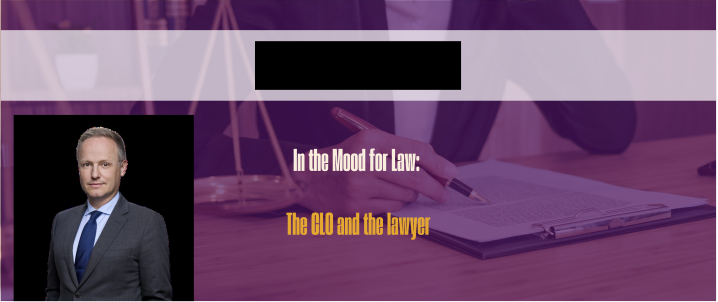
In the Mood for Law: the CLO and the lawyer
Faced with risks, internal expectations and group-level constraints, Chief Legal Officers (CLOs) must rethink their relationships with external legal counsel, placing greater emphasis on trust, seamless communication and strategic empathy.
Why Can Relationships Between Chief Legal Officers (CLOs) and External Lawyers Be Complex?
Because they are often more political than one might think. These relationships do not develop in a theoretical vacuum, but within an environment where headquarters’ expectations, operational constraints, compliance requirements and internal governance dynamics intersect. A CLO may find themselves having to work with a law firm they did not choose, whose processes and contacts they do not necessarily know or control. In Luxembourg, the context adds another layer of complexity: many CLOs operate within entities belonging to international groups. Their ability to select external counsel and manage the relationship may therefore be limited. This can sometimes lead to a lack of efficiency and fluidity, or even a loss of trust.
There are also common sources of misunderstanding: response times perceived as too long, a lack of transparency regarding fees, or the feeling that external lawyers do not understand the client’s immediate priorities. These frustrations can be mitigated if the relationship is built from the outset on clear foundations, with shared tools, well-defined expectations and a mutual willingness to adapt.
Complex, but essential?
Yes, absolutely. In Luxembourg, in-house legal departments often operate with relatively small teams. CLOs do not always have a multidisciplinary team at their disposal. They must therefore be able to rely on external counsel not only to address complex legal matters, but also to manage peaks in workload, respond to urgent situations and navigate an ever-evolving regulatory environment.
For law firms, this relationship is far from incidental. It is central to a firm’s long-term development strategy. A client with whom a relationship of trust has been established is more likely to return, seek advice at an early stage and involve their lawyer not merely as a legal expert, but also as a strategic sparring partner in their decision-making.
Does this relationship need to be reconsidered?
Yes, in many cases. Historically, the lawyer-client relationship has often followed a top-down, almost transactional model: a question is asked, a written opinion is provided, and an invoice is issued. Today, this model is showing its limitations. CLOs expect their lawyers to know them, anticipate their needs and understand their internal constraints, including budgetary considerations.
This requires moving beyond a strictly reactive approach and building a genuine partnership. It begins with regular communication, rather than exchanges limited to specific matters or crises. It also involves better integrating the law firm into the client’s legal processes, which requires time, a structured approach and a shared commitment.
What Are the Foundations of Effective Collaboration?
The most important foundation is the quality of information flows. Simple follow-up meetings, even brief ones, help ensure that everyone remains aligned. A clear, shared dashboard makes it easier to prioritise tasks and monitor progress. Above all, it is essential to know whom to contact: too many difficulties arise because a request is sent to the wrong person and remains unanswered or is not addressed within a reasonable timeframe. It is therefore useful to identify the appropriate points of contact on both sides from the outset: Who can give instructions? Who is available in an emergency? Who is the right person to handle a particular request? This requires organisation and coordination, particularly on the part of external counsel and their teams.
What about urgent situations?
Urgent situations are always a test of the quality of a relationship. A dedicated hotline providing easy access to an experienced lawyer can make all the difference. This could take the form of a priority email address or a messaging channel. What matters is ensuring genuine availability. CLOs expect prompt responses, even if preliminary, and reassurance that the team is fully engaged.
“A lawyer’s independence must go hand in hand with a genuine understanding of the client. Legal advice cannot be given in a vacuum.” – Nicolas Thieltgen, Managing Partner
What practical tools would you recommend?
Secure extranets, Teams or Slack channels, or other collaborative platforms. The important thing is to avoid multiplying tools unnecessarily. One tool used effectively is better than three that are only partially adopted. There must also always be a clear framework governing confidentiality, GDPR compliance and traceability.
Should the relationship also involve knowledge sharing?
Yes, and in both directions. CLOs expect their external lawyers to proactively inform them of regulatory developments, alert them to litigation trends and even offer targeted training for their in-house teams. Conversely, CLOs are on the front line. They identify early warning signs, changes in the regulator’s approach and emerging tensions within their sector. Sharing this information with external counsel enables lawyers to adapt their analysis, refine their recommendations and focus their legal monitoring on the most relevant developments.
How Can a Lawyer’s Independence Be Reconciled with This Strategic Proximity?
This is a fundamental question. Independence is non-negotiable: it is one of the cornerstones of our professional ethics. In particular, it guarantees CLOs an objective and uncompromising perspective and ensures that, in times of crisis or internal tension, they can rely on a trustworthy adviser.
However, this independence must be accompanied by a genuine understanding of the client. Legal advice cannot be given in a vacuum: lawyers must take account of operational realities, internal power dynamics and business timelines. Independence then becomes a source of strategic support rather than isolation. This is what I call strategic empathy.
Strategic empathy?
Empathy, in this context, does not mean complacency or emotion. It is about the ability to adapt: understanding the pressures faced by CLOs, the actual scope of their decision-making authority and their operational constraints. Good legal advice is not valuable solely because it is formally or technically correct. It must also be practical, understandable and responsive to a specific challenge.
Sometimes, this means focusing less on demonstrating one’s legal knowledge, which should be mastered rather than displayed, and adopting a more pragmatic approach.
Conclusion: What Does the Ideal Relationship Between a CLO and External Counsel Look Like?
It is a relationship built on trust, regular communication and mutual understanding. It is not simply about delegating tasks, but about active collaboration. When properly established, this relationship becomes a driver of legal performance, a source of reassurance and even a strategic differentiator for the company.
It requires time, commitment and sometimes adjustments. But the return on investment is tangible for both parties: greater clarity, improved efficiency and stronger legal resilience.
Nicolas Thieltgen, Managing Partner: nicolas.thieltgen@btplawyers.lu